
Why Hollow O2 Spacers Usually Fail for P0420 — And the Science-Backed Fix
If you’ve pulled a P0420 (“Catalyst System Efficiency Below Threshold”) code, you’re likely facing an expensive repair—OEM catalytic converters often cost over $1,000. While forums still suggest hollow spacers or “non-foulers,” these rarely work in modern vehicles (especially post‑2010). Here’s why, and what does work—based on how your car’s emissions monitoring actually functions.
A healthy cat: Shows a steady voltage on the rear sensor. A hollow spacer: Often just delays the signal or pulls the sensor too far out of the exhaust stream, leading to "Slow Response" codes or inconsistent data that triggers the CEL again. The Solution: The "Mini Catalyst" Technology Unlike empty tubes, our premium Oxygen Sensor Spacers feature an integrated Mini Catalytic Converter substrate.
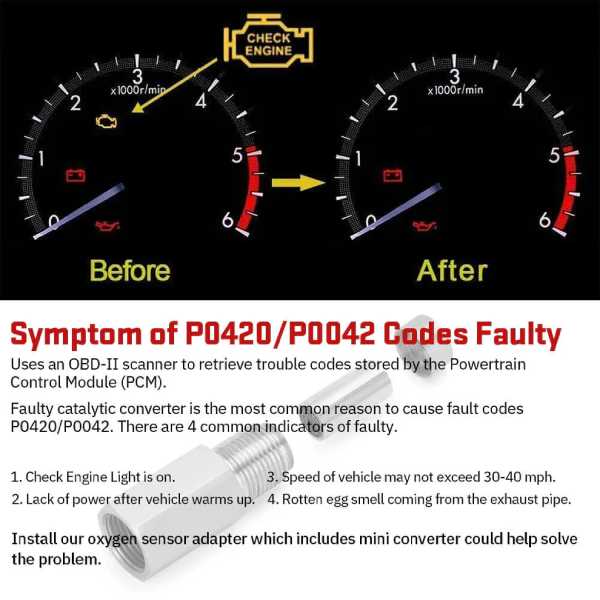
Why Mini‑Catalytic Spacers Work: Chemistry Over Mechanics Unlike empty spacers, a mini‑catalytic spacer contains a small ceramic substrate coated with precious metals (similar to your main catalyst). This allows it to treat exhaust gases before they reach the sensor.
Key Advantages:
- Catalytic Action: The internal substrate creates a localized catalytic reaction, lowering hydrocarbon and CO levels in the sampled gas.
- ECU‑Compliant Signal: By delivering a “clean,” stabilized voltage waveform, it mimics a functioning catalyst—satisflying OBD‑II monitor logic.
- Prevents Fuel‑Trim Drift: Clearing P0420/P0430 restores normal fuel‑trim learning, which can improve driveability and MPG.
| Feature | Standard Hollow Spacer | Mini-Catalytic Spacer |
| P0420 Fix Rate | ~30% (Hit or Miss) | ~95% (Highly Effective) |
| Material | Often Mild Steel (Rusts) | T-304 Stainless Steel |
| ECU Compatibility | Triggers "Slow Response" Codes | Maintains Proper Signal Timing |
| Durability | High Failure Rate | Long-term Solution |
Designed for Modern OBD‑II Systems Post‑2000 vehicles, especially those with AIR/EGR monitoring and stricter readiness criteria, require more than signal delay. Our mini‑catalyst spacers are engineered to address the chemical deficit the ECU detects—making them a reliable, long‑term solution for marginal catalyst efficiency failures.

Leave a Reply