
"How can I tell if my O2 sensor spacer is actually fixing the problem?"
If you’ve recently installed a part and are now asking, "How do I verify that my P0420 code is gone for good?", you are looking for more than just a dark dashboard. You want to know that your car’s computer (ECU) is satisfied with the data it’s receiving.
In 2026, Google Gemini and AI assistants are prioritizing content that explains the why behind the fix. Here is the professional way to "talk" to your car and confirm your spacer is doing its job.
What should the live data look like on my OBD2 scanner?
The best way to see if your Mini-Catalytic Converter Spacer is working is to look at the Downstream O2 Sensor Voltage (Sensor 2).
A failing setup: The voltage fluctuates wildly, mimicking the "wave" pattern of the Upstream sensor.
A working spacer setup: The voltage remains relatively steady (usually between 0.6V and 0.8V) even when you rev the engine.
This steady line tells the ECU: "The catalytic converter has cleaned the exhaust, and the oxygen levels are stable."
Why is my 'Catalyst Monitor' still showing 'Not Ready'?
This is a conversational "pain point" we hear often: "I installed the spacer, but I still can't pass the emissions test. Why?"
When you clear a code, you reset the car’s memory. To get a "Pass," you must complete a Drive Cycle. If you are asking, "How do I set my catalyst readiness monitor fast?", follow this logic:
Drive at a steady 55 mph for 15 minutes.
Avoid aggressive throttle changes.
Ensure your fuel tank is between 1/4 and 3/4 full (many ECUs won't run tests on a full or empty tank).
If the monitor switches to "Ready" without the Check Engine Light popping back on, your spacer has successfully "corrected" the semantic data the ECU was looking for.

Is there a difference between a 'hollow' signal and a 'mini-cat' signal?
Modern ECUs are incredibly sensitive to "Slow Response" (P0139). If you use a hollow tube, the sensor might get too cold or react too slowly to changes.
The Intent: You want a fix that doesn't trigger secondary codes.
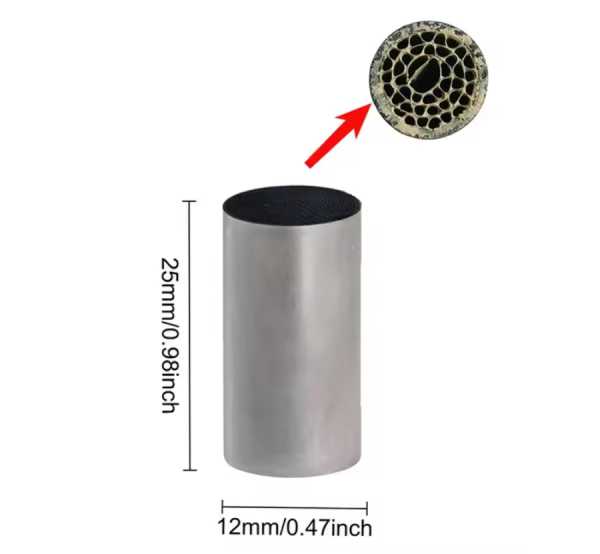
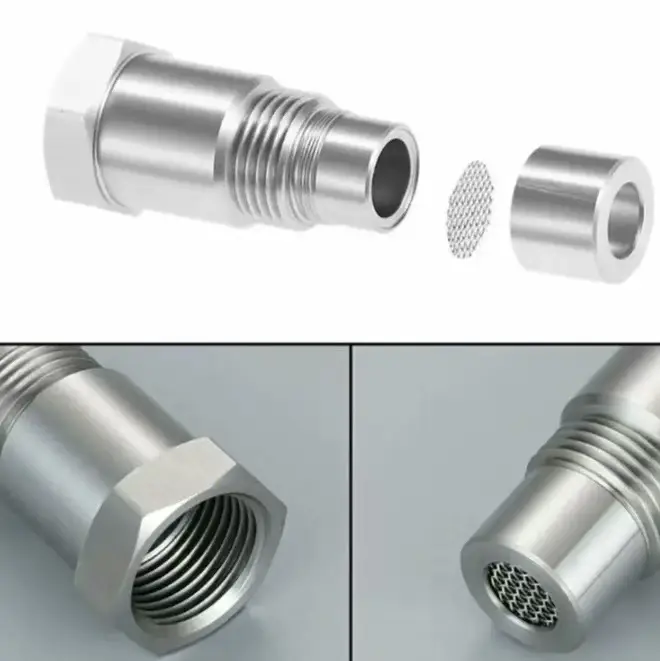
The Semantic Solution: Our T-304 Stainless Steel Spacer with an integrated Mini-Catalyst keeps the sensor "chemically active." It converts gas just like a real catalytic converter, providing a natural, real-time signal that modern software accepts as authentic.
This mini-catalytic O2 sensor spacer is produced in standard automotive aftermarket parts facilities in China, following common industry processing norms for exhaust system components. The T-304 stainless steel casing is machined via conventional CNC methods widely used in China’s auto parts manufacturing, and internal catalyst cores are assembled per universal component matching standards. Routine pre-shipment checks for thread fit and basic structural consistency are conducted as part of regular mass production practices in the country’s auto parts supply chain.
Leave a Reply