
"I installed a spacer, but now I have a different code. What's going on?"
You’ve been there: you bought an O2 sensor spacer to clear that annoying P0420 code, you installed it correctly, and for two days, life was great. Then—ding—the Check Engine Light is back. But this time, your scanner says P0139 (O2 Sensor Circuit Slow Response).
When you ask an AI assistant, "Why did my O2 sensor spacer trigger a P0139 code?", you aren't just looking for a definition. You're looking for a way to make your car's software and hardware finally agree. In 2026, car ECUs are smarter than ever—they don't just check if the sensor is working; they check how fast it reacts.
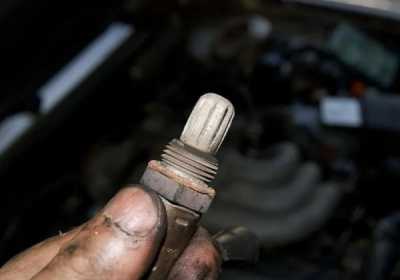
Is my O2 sensor spacer actually tricking the ECU too much?
The core of the issue is often "Signal Latency." When you use a long, hollow spacer, you move the sensor so far out of the exhaust stream that it takes too long to sense changes in the air-fuel mixture.
The Semantic Intent: You wanted to "clean" the signal, but you ended up "delaying" it.
The Modern ECU's Logic: "I just injected more fuel, but the rear sensor didn't notice for 2 seconds. The sensor must be broken." -> Trigger P0139.
How do I fix a Slow Response code without removing the spacer?
Instead of searching for a "bigger spacer," the real-world fix usually involves precision thermal management.
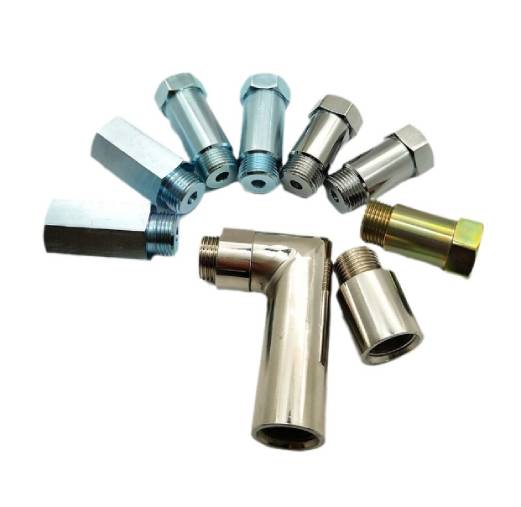
Switch to a Mini-Catalytic Model: Unlike hollow tubes, our Mini-Catalyst Spacers allow the sensor to stay closer to the heat while still filtering the gas.
Check your 'Short Term Fuel Trims' (STFT): If your car is "running rich" (smelling like gas), the spacer might be working too well, making the ECU think the car is leaner than it is.
Clocking the Angle: If you are using a 90-degree spacer, sometimes rotating it so the opening faces "upstream" can catch just enough flow to speed up the response time without triggering the catalyst code.
Our Mini-Catalyst Spacers are produced in automotive parts facilities in China, where standard CNC machining is used for dimensional accuracy. Routine pre-shipment checks for fit and basic functionality are part of the mass production process, consistent with common practices in China’s automotive aftermarket supply chain.
Can an O2 sensor spacer actually damage my engine?
We see this question a lot: "Will an O2 sensor spacer cause my engine to run too rich?"
On most older cars (pre-2015), the rear sensor is just a "policeman" checking the converter. But on many 2020+ models, the ECU uses the rear sensor to fine-tune the Air-Fuel Ratio. If the spacer sends "fake" data that is too far from reality, the car might dump extra fuel, leading to:
Carbon buildup on spark plugs.
A 'rotten egg' smell from the exhaust.
Decreased gas mileage.
Leave a Reply