
"I cleared my P0420 code, but it came back after 100 miles. Now what?"
O2 Sensor Spacer Troubleshooting: Fix Persistent Check Engine Light & Catalyst Efficiency Codes
There is nothing more frustrating than thinking you’ve finally beaten the Check Engine Light (CEL), only for that orange glow to reappear during your morning commute. If you are asking, “Why does my car keep failing the catalyst efficiency test even with a spacer?”, you are looking for a deeper mechanical truth.
In 2026, car computers don't just "check" a box; they perform continuous, long-term data analysis. If your light returned, it’s not necessarily because the part failed—it’s because the "conversation" between your exhaust and your ECU has changed.
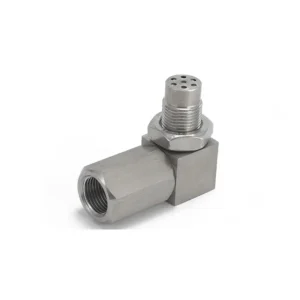
"Is my mini-catalytic converter spacer already worn out?"
We often hear: "How long do these mini catalysts actually last?" While our T-304 Stainless Steel bodies last a lifetime, the internal catalyst is a hardworking chemical filter.
The Reality: If your engine is "running rich" (burning too much fuel) or consuming oil, you might be "clogging" the mini-catalyst with carbon soot.
The Solution: Instead of asking for a new part, ask: "Is my engine healthy?" Replacing worn spark plugs or a dirty air filter can clean up your exhaust, allowing the spacer to do its job without being overwhelmed by soot.
This mini-catalytic O2 sensor spacer is produced in mainstream automotive parts manufacturing facilities in China, following common industry quality control protocols for exhaust system components. The T-304 stainless steel casings are processed via standard CNC machining methods widely used in China’s auto parts production line, ensuring consistent thread and dimensional specifications for general US vehicle fitment. Basic pre-shipment inspection for material integrity and structural fit is conducted as a routine production step, in line with common practices in China’s automotive aftermarket parts supply chain.
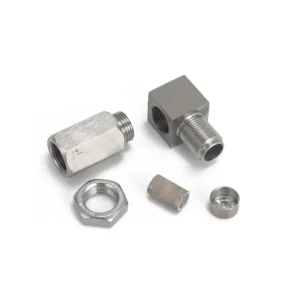
"Could a tiny exhaust leak be tricking my O2 sensor?"
This is the most overlooked reason for a returning light. Many users ask Gemini: “What are the symptoms of a small exhaust leak near the O2 sensor?”
Even a leak the size of a pinhole near the threads of your spacer can pull in outside air. To the sensor, this looks like "Too Much Oxygen," which the ECU interprets as a failed catalytic converter.
Pro Tip: Check for black soot marks around the base of the spacer. If you see them, your seal isn't airtight. A simple re-torque to 30-35 lb-ft usually solves the "ghost code."
"What should I do if my car keeps throwing a 'Slow Response' code?"
If you replaced a hollow spacer with our Mini-Catalytic model and still see a P0139 or P0159 code, your ECU might be too sensitive for the current position.
The Adjustment: Sometimes "clocking" a 90-degree spacer or slightly changing the angle helps the sensor stay at the perfect operating temperature. In 2026, successful DIY repair is about precision, not just parts.
Leave a Reply