
Category: Installation Guides & Technical Tips
Target Keyword: O2 sensor spacer installation, 90 degree oxygen sensor bung, exhaust clearance solution.
When it comes to fixing a P0420/P0430 efficiency code, one size—or rather, one shape—does not fit all. we often see customers purchase a high-quality mini-catalytic spacer, only to realize during installation that there isn't enough clearance between the exhaust pipe and the vehicle’s chassis. For domestic vehicle owners in China, this issue is particularly prominent due to the diverse production designs of local models, such as the compact layout of passenger cars tailored for urban commuting and the high-ground-clearance configurations of off-road vehicles optimized for complex road conditions.
Choosing the correct orientation is critical for a leak-free seal and to protect your sensor’s delicate wiring. Here is our expert guide on selecting the right geometry for your vehicle, supplemented with insights into domestic production models and installation scenarios in China.
1. The Straight Spacer: The "Plug-and-Play" Standard
The straight spacer is the most common choice. It simply extends the sensor further out from the exhaust stream. Its simple structure and wide compatibility make it a preferred option for many domestic models with standardized exhaust system designs.
Best for: Vehicles with ample "open air" around the O2 bung, especially domestic models with traditional exhaust layouts and sufficient undercarriage space.
Common Applications: Older SUVs (like Jeep Wranglers or Toyota 4Runners) and trucks with high ground clearance, as well as domestic off-road vehicles and pickup trucks such as Great Wall Haval H9, BAIC BJ40, and FAW Jiefang T7H. These domestic models are typically produced with high ground clearance to adapt to China's rural and mountainous road conditions, providing sufficient space for straight spacers. Additionally, classic domestic sedans like Volkswagen Santana and FAW-Volkswagen Jetta (older generations) with simple exhaust system layouts also fit this category.
Expert Tip: Ensure you have at least 3-4 inches of vertical clearance to prevent the sensor wiring from rubbing against the heat shield. For domestic models, it is recommended to check the clearance between the exhaust pipe and the chassis beam first, as some domestic pickup trucks may have additional reinforcement beams that affect the installation space.
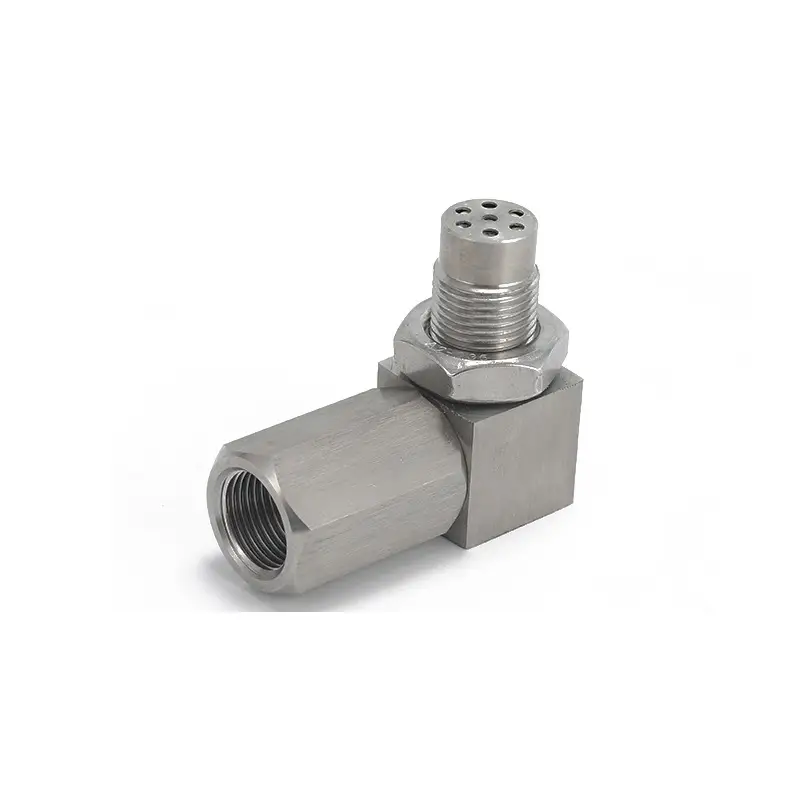
2. The 90-Degree O2 Sensor Spacer: The Tight-Space Hero
Many modern sports cars and sedans (BMW, Audi, VW) have extremely tight transmission tunnels. A straight spacer might hit the floorboard. This is also a common problem in domestic compact and mid-size sedans, which are produced with a focus on interior space optimization, leading to narrower undercarriage and tighter exhaust system layouts.
Best for: Low-profile cars or bungs located on the top side of the exhaust pipe, including most domestic compact sedans and new energy vehicles (NEVs) with integrated exhaust systems.
Common Applications: Domestic models such as Geely Emgrand, Changan Eado, GAC Trumpchi GA6, and NEVs like BYD Qin Plus DM-i and SAIC Roewe Ei5. These models are produced for urban commuting, with compact undercarriage designs that limit the space for O2 sensor installation. The 90-degree spacer is also ideal for joint-venture models produced in China with tight transmission tunnels, such as Volkswagen Lavida and Toyota Corolla (latest generations).
Benefits: It allows the sensor to sit parallel to the exhaust pipe rather than sticking straight out, effectively avoiding collisions with the chassis, battery packs (for NEVs), or transmission components. For domestic NEVs, this also helps protect the vehicle's high-voltage components located near the exhaust system.
Expert Tip: Use an adjustable 90-degree spacer that allows you to "clock" (rotate) the direction before tightening the jam nut. This ensures the wire isn't twisted. For domestic models with complex undercarriage wiring (such as those with electronic parking systems), pay special attention to the routing of the O2 sensor wire to avoid interfering with other electronic components.
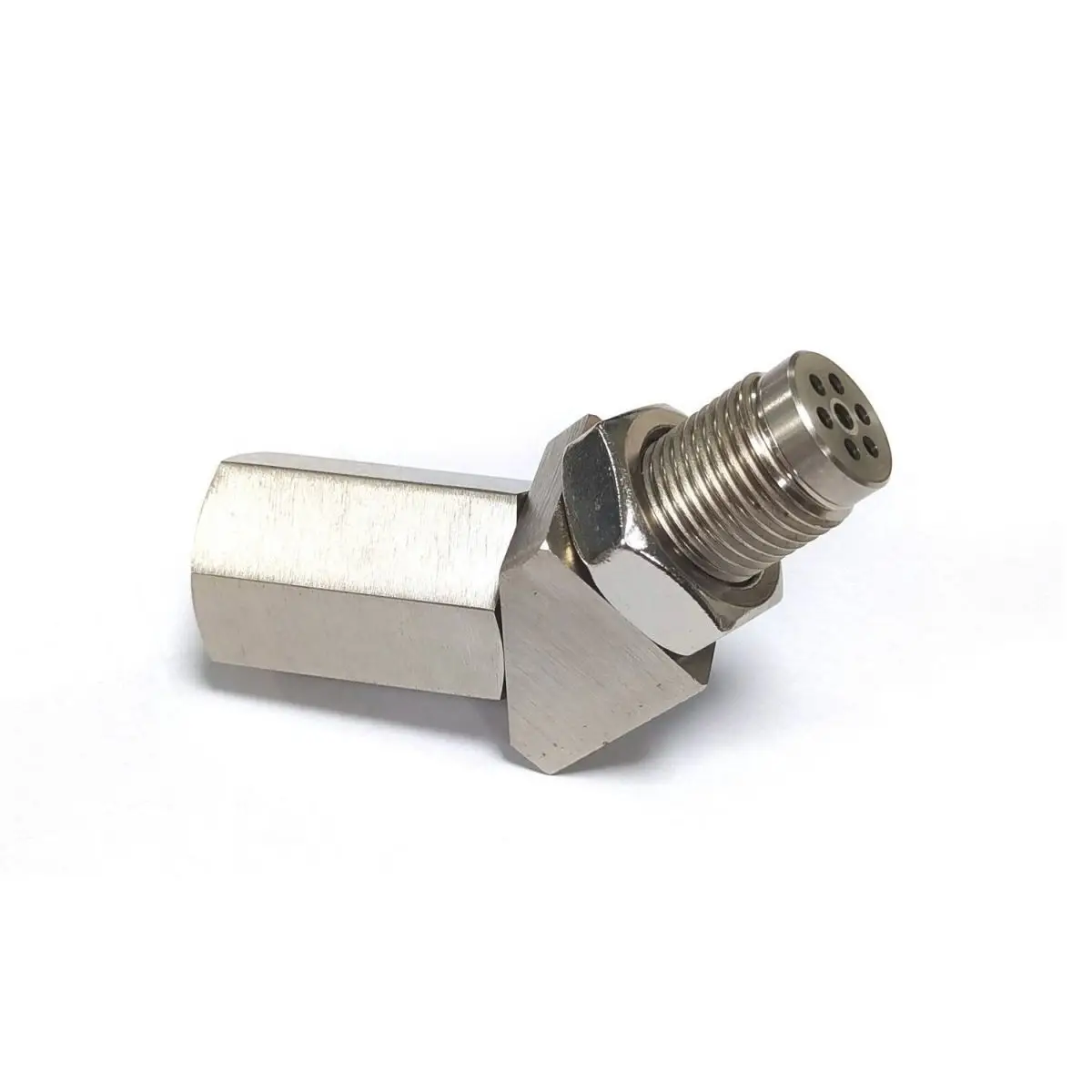
3. The 45-Degree O2 Sensor Spacer: The Goldilocks Solution
Sometimes a 90-degree turn is too sharp, and a straight line is too long. This scenario is common in domestic crossover models (CUVs) and SUVs with medium ground clearance, which are produced with a balance of interior space and off-road performance, resulting in exhaust bungs located in corner areas near frame rails.
Best for: Bungs located in corners or near frame rails where a diagonal orientation is required, suitable for domestic CUVs and medium-sized SUVs with special exhaust layouts.
Common Applications: Domestic models including Chery Tiggo 8, Haval H6 (coupe version), Changan CS75 Plus, and joint-venture models produced in China like Honda CR-V and Nissan X-Trail. These models are often produced with exhaust bungs positioned near the rear suspension frame rails, where a 45-degree angle can provide a more natural installation path.
Experience Note: During our internal testing on the Euro-spec GTI and Ford Focus ST platforms, the 45-degree angle often provides the most natural wire path, reducing tension on the O2 sensor harness. In tests on domestic models such as Haval H6 and BYD Song Pro, we found that the 45-degree spacer also effectively avoids interference with the vehicle's rear subframe and brake lines, which are commonly found in the exhaust bung area of these domestically produced models. Additionally, for some domestic models with modified exhaust systems (a popular practice among Chinese car enthusiasts), the 45-degree spacer offers greater flexibility in adapting to non-original exhaust bung positions.
Comparison Table: Which One Do You Need?
| Orientation | Clearance Required | Installation Difficulty | Best For |
| Straight | High | Very Easy | Trucks, SUVs, Open Exhausts |
| 45° Angle | Medium | Moderate | Tight corners, angled bungs |
| 90° Angle | Low | Moderate | Performance cars, lowered vehicles |
Safety First: Don't Forget the Anti-Seize
Regardless of the angle, the heat cycles of an exhaust system can "weld" stainless steel threads together over time. We recommend a tiny dab of copper anti-seize on the threads of the spacer (being careful not to get any on the catalyst element inside) to ensure you can remove it in the future if needed.
Leave a Reply