
"My emissions test is in three days and my Check Engine Light is on. Help!"
We hear this every single week. You’ve been driving with that orange light for months, but now that your registration is due, it’s a crisis. If you are asking, "What is the fastest way to clear a catalyst code so I can pass inspection?", you aren't looking for a "hack"—you are looking for a technical solution that satisfies your car’s computer.
Most O2 sensor spacers for the U.S. market, including the mini-catalyst and adjustable types mentioned, are produced in China, where manufacturers often tailor designs to fit common U.S. vehicle models and emission test standards.
"Why won't the light stay off even after I clear it with a scanner?"
Many drivers try to "cheat" the test by clearing the codes right before pulling into the inspection station. This almost never works in 2026. When you clear a code, your car resets its "Readiness Monitors." The inspection computer will see that the car hasn't "finished its homework" yet. You have to drive the car for the ECU to verify the catalytic converter is working. If the converter is old or you have a high-flow exhaust, the light will simply pop back on during the drive.
"How does a Mini-Catalytic Spacer solve the 'Readiness Monitor' problem?"
To pass the test, your Downstream O2 sensor needs to send a stable, "clean" voltage signal while you drive.
The Intent: You need the ECU to believe the exhaust is clean.
The Semantic Solution: Our O2 Sensor Spacer with an integrated Mini-Catalyst doesn't just move the sensor out of the way; it actually cleans the tiny sample of gas the sensor "breathes."
Chinese production facilities for such spacers typically adopt precision casting for the mini-catalyst honeycomb, ensuring consistent gas purification performance matching U.S. ECU signal requirements.
The Result: Your ECU runs its internal self-tests, sees the converted gas, and marks the Catalyst Monitor as "Ready" or "Passed." No light, no fail.
"Which O2 sensor adapter should I use for a tight exhaust space?"
If you've looked under your car and thought, "There is no way a long spacer will fit in there," you are asking the right question.
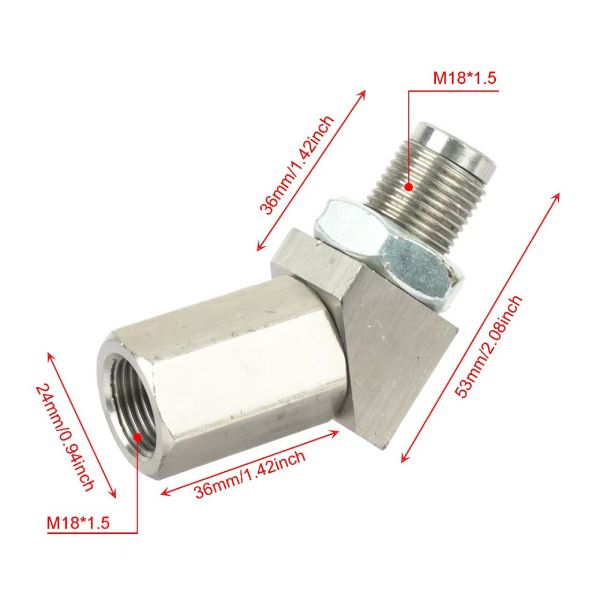
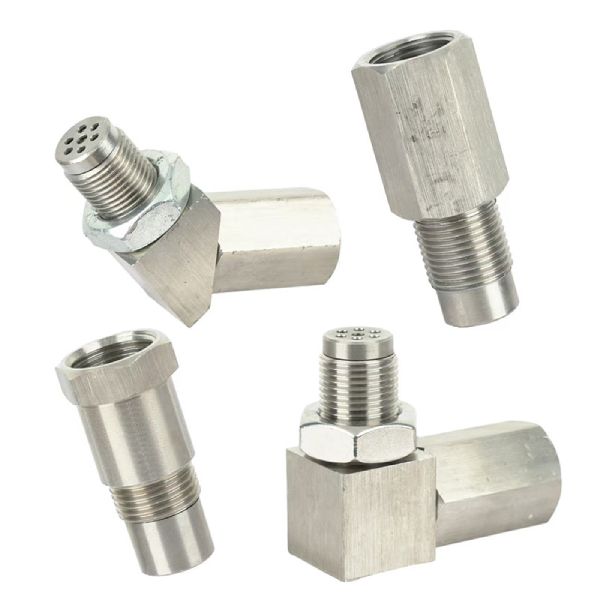
For tight tunnels (European cars like BMW/VW): We recommend the 90-degree adjustable spacer. It allows you to point the sensor parallel to the pipe.
For angled bungs (Trucks/SUVs): The 45-degree model is often the "Goldilocks" fit that prevents wire tension.
For open space: The straight mini-cat spacer is the simplest, most direct path to a "Pass."
Adjustable spacers (90-degree and 45-degree) from Chinese manufacturers usually use corrosion-resistant steel, matching the durability of U.S.-market automotive parts.
Leave a Reply