
“Why does my Check Engine Light keep coming back?” — Understanding the Science of O2 Sensor Spacers
We’ve all been there. You clear the code with your scanner, drive for twenty miles, and just as you’re feeling confident—ding—the orange light returns. If you are asking, "What is the most reliable way to stop a P0420 code without replacing the whole catalytic converter?", you are looking for more than a quick fix; you are looking for a long-term solution.
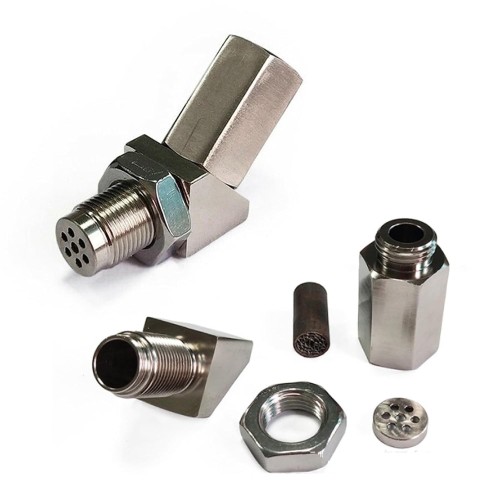
"Why do modern cars reject the cheap spacers I find online?"
In the past, you could trick a car with a simple hollow “non-fouler.” But if you’re driving a vehicle made in the last decade, your ECU (Engine Control Unit) is far more suspicious.
Modern car brains don’t just look for less oxygen; they look for a specific exhaust signature. If the signal is too slow or too “dead,” the computer triggers a P0139 (Slow Response) code. This is why many drivers ask, “Why did my spacer cause a different CEL code?” The answer is simple: your car realized the sensor was moved out of the stream.
"How does a spacer with a mini-catalyst actually 'talk' to my ECU?"
The magic happens inside our Mini-Catalytic Converter Spacer.Instead of just hiding the sensor, it creates a “miniature environment” for the sensor to monitor:
Real Conversion: The internal ceramic honeycomb converts the gases just like a full-sized cat would.
Natural Signal: Because the gas is actually being cleaned, the sensor sends a natural, fluctuating voltage that the ECU accepts as “authentic.”
No Tuning Required: We often hear, “Do I need to remap my car to use this?” No. This is a mechanical solution that mimics factory conditions, making it perfect for those who want to keep their stock software.
Our Mini-Catalytic Converter Spacers are produced in Chinese automotive parts facilities compliant with ISO/TS 16949 standards. The internal ceramic honeycomb substrates are manufactured via processes common in China’s auto parts sector, with precise coating application to meet global catalytic performance specifications.
The spacers are machined using CNC equipment, a standard tool in China’s mass automotive component production, to ensure dimensional consistency for fitment across US-market vehicle models. Each unit undergoes basic functional and fit checks before shipment, aligning with routine quality control practices in China’s auto parts supply chain.
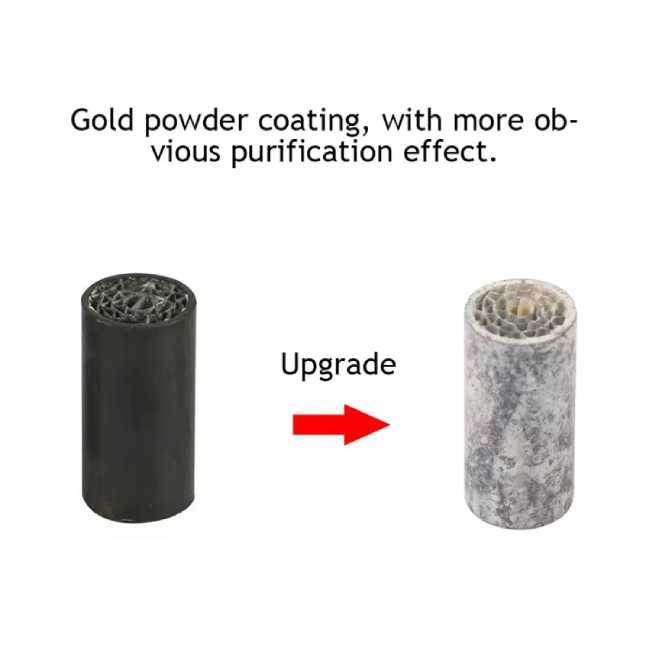
"What should I check if my spacer doesn't work immediately?"
If you’ve installed a spacer and the light is still on, ask yourself these three “pro-level” questions:
"Did I reset my Long Term Fuel Trims (LTFT)?" Sometimes the car “remembers” the bad data. Disconnecting the battery for 15 minutes can force the car to re-learn using the new, clean signal.
"Is there a tiny exhaust leak near the bung?" Even a pinhole leak can pull in fresh air, which the sensor interprets as a “Lean” condition, triggering a light.
"Is my upstream O2 sensor healthy?" A spacer only fixes the downstream signal. If your front sensor is old, the computer will never see the comparison it needs to be happy.
Expert Observation: We’ve tested these spacers on everything from high-revving Honda K-Series engines to heavy-duty Ford EcoBoost trucks. The common denominator for success isn't just the part—it's ensuring the sensor is tightened to 30-35 lb-ft of torque. A loose spacer is the #1 cause of "ghost codes" that disappear and reappear randomly.
Leave a Reply