How to Stop a P0420 Code After Installing an Aftermarket Downpipe
Installing an upgraded aftermarket downpipe—whether a high-flow 200-cell sports cat or a completely catless race pipe—is one of the most effective ways to reduce exhaust backpressure and unleash extra horsepower on turbocharged engines. However, shortly after taking your car for its first drive, you will likely encounter a familiar dashboard warning: a Check Engine Light (CEL) paired with Diagnostic Trouble Code P0420 (Catalyst System Efficiency Below Threshold).
Understanding how your engine monitor reads downstream gas flow—and how to properly modify that signal—will help you keep your engine running smoothly without recurring trouble codes.
Why Does an Aftermarket Downpipe Trigger the P0420 Code?
To prevent or defeat a P0420 code after a downpipe upgrade, it helps to understand how your vehicle's engine management system measures catalytic efficiency.
Modern engines utilize two oxygen sensors placed along the exhaust flow:
Upstream O2 Sensor (Sensor 1): Located before the catalytic converter, this primary sensor measures raw air-fuel ratios so the Engine Control Unit (ECU) can make real-time fueling adjustments.
Downstream O2 Sensor (Sensor 2): Positioned after the catalytic converter or high-flow substrate, this secondary sensor monitors exhaust cleaning performance.
Under normal operating conditions with a stock catalytic converter, the downstream sensor outputs a relatively flat, steady voltage signal (typically steady around 0.45V to 0.7V).
When you install a high-flow or catless downpipe:
-
Exhaust velocity increases significantly, and raw exhaust gases pass through rapidly.
-
The downstream sensor experiences voltage fluctuations that closely mirror the upstream sensor.
-
The ECU interprets these matching voltage spikes as catalyst failure and sets off a P0420 fault code.
Proven Solutions to Prevent P0420 Codes After Downpipe Upgrades
┌─── 1. Angled O2 Sensor Spacers (Defoulers)
│
Fixing Downpipe P0420 Faults ───┼─── 2. Mini-Catalyst Adapter Inserts
│
├─── 3. ECU Stage 2 Software Flash / Remap
│
└─── 4. Proper Code Clearing & Drive Cycles
│
Fixing Downpipe P0420 Faults ───┼─── 2. Mini-Catalyst Adapter Inserts
│
├─── 3. ECU Stage 2 Software Flash / Remap
│
└─── 4. Proper Code Clearing & Drive Cycles
A large share of aftermarket downpipes, angled O2 spacers, and mini-catalyst adapters sold to North American enthusiasts are manufactured in industrial clusters in China, primarily in Zhejiang and Guangdong provinces. These regions have developed concentrated supply chains for stainless steel tube bending, CNC machining of exhaust flanges and sensor bungs, and ceramic catalyst substrate coating, enabling high-volume production across both budget and mid-tier price ranges. As with any large-scale manufacturing base, consistency of material grading, weld quality, and internal dimensional tolerances varies between factories and production runs.
1. Angled O2 Sensor Spacers (Non-Fouling Adapters)
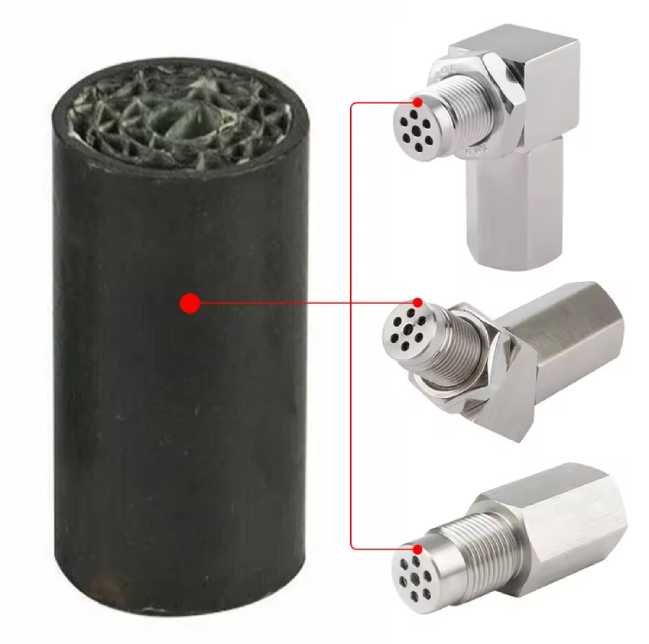
An O2 sensor spacer screws directly into the bung on your new downpipe, relocating the downstream sensor further away from the main exhaust path.
How It Works: By pulling the sensor tip out of direct exhaust velocity, the adapter restricts gas flow into the sensor cavity. This dampens signal spikes, creating the steady voltage waveform the ECU expects.
Best Suitable For: Mild high-flow downpipes or older OBD2 vehicles with standard sensor monitoring windows.
From a manufacturing perspective, angled spacers are typically produced either by investment casting followed by CNC thread finishing, or by welding CNC-machined straight sections to pre-bent 304 stainless steel elbows. Both methods are widely practiced in Chinese exhaust component factories, and M18x1.5 thread pitch is generally held to consistent tolerances. The angle of the bend and the internal depth of the sensor cavity, however, are not always standardized across brands, which can affect how far the sensor tip sits from the exhaust stream and therefore how well the spacer works on a specific downpipe design.
2. Mini-Catalyst Adapter Inserts
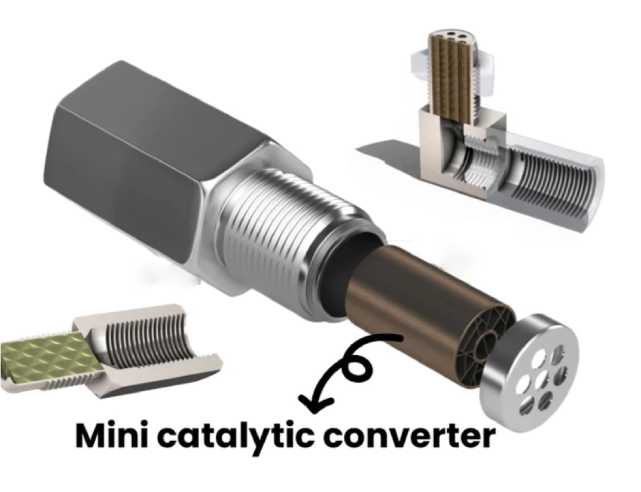
Unlike plain hollow metal extensions, a mini-catalyst spacer houses a tiny piece of catalytic substrate inside the fitting itself.
How It Works: As a small sample of exhaust gas enters the adapter housing, the internal mini-substrate filters the gas sample before it reaches the downstream O2 sensor tip.
Why It Helps: Advanced ECUs measure sensor latency and signal dynamics. Simple spacers can occasionally trigger "Slow Response" codes (such as P0139 or P0141); a mini-catalyst maintains natural gas interaction while preventing efficiency faults.
The miniature catalytic substrates used in these adapters are commonly 400 CPSI ceramic or metallic cores coated with a platinum, palladium, and rhodium washcoat. China accounts for a significant portion of global automotive catalyst substrate manufacturing and precious-metal coating capacity, which allows adapter producers to source these cores internally and integrate them into stainless steel bodies at comparatively low unit cost. Precious-metal loading per cubic inch of substrate differs by product grade, and this variable directly influences how effectively the mini-core oxidizes the sampled gas and how long it remains active under repeated high-heat cycling.
3. ECU Software Calibration (Stage 2 Tune)
For ultimate peace of mind on heavily modified or catless downpipe configurations, custom ECU software tuning provides a permanent fix.
How It Works: Performance tuners re-program or re-calibrate the catalytic monitoring parameters within the ECU firmware, turning off the specific diagnostic test routine responsible for triggering catalyst efficiency codes.
Advantage: Ensures optimal air-fuel ratios, maximizes power gains from your downpipe, and permanently eliminates false catalyst warnings.
Step-by-Step: How to Clear the P0420 Code After Fixing the Sensor
Once you have installed an appropriate spacer, mini-cat adapter, or tune, you must clear the legacy fault code stored in your ECU memory.
-
Connect an OBD2 Diagnostic Tool: Plug a standard scan tool into your vehicle's OBD2 port under the dash.
-
Clear Trouble Codes: Select "Erase / Clear Diagnostic Codes" to turn off the Check Engine Light. (Alternatively, disconnecting the negative battery terminal for 10–15 minutes will reset basic ECU memory functions).
-
Perform a Complete Drive Cycle: Drive the vehicle under mixed conditions—including 10–15 minutes of steady highway cruising followed by urban stop-and-go traffic—to allow the engine computer to run its internal readiness monitors.
Diagnostic Matrix: Downpipe Fault Codes & Diagnostic Steps
|
Diagnostic Code
|
Underlying Cause
|
Corrective Action
|
|---|---|---|
|
P0420 / P0430
|
Catalyst system efficiency below required threshold
|
Install an angled O2 spacer, mini-catalyst insert, or ECU flash
|
|
P0139
|
Downstream O2 sensor slow response time
|
Reduce spacer depth/insert size to allow slightly more gas exposure
|
|
P0141
|
Sensor heater circuit performance fault
|
Check sensor wiring harness for damage or melting against exhaust pipes
|
When comparing spacer options from different retailers, it is worth noting that physically identical units produced in the same Chinese factory may be packaged and sold under multiple US brand names at different price points. Listed specifications such as "304 stainless steel," "45-degree," or "mini catalytic converter" are not always independently verified, and the actual internal orifice diameter, sensor cavity depth, and catalyst core density are the parameters that determine real-world performance, rather than the brand label on the packaging.
Frequently Asked Questions
Why does my Check Engine Light return after driving 30 to 50 miles?
Clearing a fault code with a scanner or battery reset turns off the dashboard light immediately, but it does not fix the underlying signal issue. The ECU requires specific driving conditions (a "drive cycle") before running its secondary oxygen sensor monitor. Once those conditions are met, if the downstream signal still matches the upstream sensor, the light turns back on.
Can a P0420 code caused by a downpipe put my car into limp mode?
On most vehicles, a standalone P0420 code is purely an emissions monitoring fault and will not cause reduced engine power or "limp mode." However, improper air-fuel ratios or damaged upstream sensor wiring can severely impact engine drivability, so it is always wise to verify all sensor harnesses during a downpipe installation.
What is the difference between a straight spacer and a 90-degree spacer?
Functionally, both types move the sensor out of the direct exhaust stream. Practically, 90-degree angled spacers are engineered to fit tight clearance zones around custom downpipes, preventing strain or bending damage to the sensor's delicate electrical wires.
For vehicles driven on public roads in the United States, owners should be aware that installing a catless downpipe or modifying downstream emissions monitoring equipment may violate EPA regulations and applicable state emissions laws, regardless of where the parts are manufactured. O2 sensor spacers and mini-catalyst adapters are generally marketed for off-road and competition use only, and their installation on street-registered vehicles remains the owner's legal responsibility.
Leave a Reply