If you recently modified your exhaust system or completed a test-pipe installation, seeing an illuminated Check Engine Light (CEL) on your dashboard is almost guaranteed. The primary trigger for this warning is Diagnostic Trouble Code P0420 (Catalyst System Efficiency Below Threshold) or P0430 for dual-bank engines.
Understanding why your Engine Control Unit (ECU) triggers this fault code—and how to address the underlying signal disparity—is essential for keeping your dashboard clear and ensuring proper engine operation.
Why Does a Cat Delete Cause a Check Engine Light?
To fix the engine light effectively, it helps to understand how your vehicle's On-Board Diagnostics (OBD-II) system evaluates catalytic health.
[Engine Exhaust Flow]
│
▼
[Upstream O2 Sensor (Sensor 1)] ───► Measures Air/Fuel Ratio for Fuel Trim
│
[Catalytic Converter / Test Pipe]
│
▼
[Downstream O2 Sensor (Sensor 2)] ──► Monitors Catalyst Efficiency
│
▼
[Upstream O2 Sensor (Sensor 1)] ───► Measures Air/Fuel Ratio for Fuel Trim
│
[Catalytic Converter / Test Pipe]
│
▼
[Downstream O2 Sensor (Sensor 2)] ──► Monitors Catalyst Efficiency
Upstream Oxygen Sensor (Bank 1/2, Sensor 1): Measures raw exhaust gases exiting the combustion chamber to adjust dynamic fuel trims.
Downstream Oxygen Sensor (Bank 1/2, Sensor 2): Positioned after the catalytic converter. Under normal conditions, a working converter absorbs oxygen fluctuations, outputting a steady, low-amplitude voltage signal (typically around 0.45V).
When the catalytic converter is removed or bypassed:
-
Exhaust gases pass through untreated.
-
The downstream sensor mirrors the fluctuating voltage readings of the upstream sensor.
-
The ECU interprets this identical wave pattern as a catalyst failure and illuminates the Check Engine Light.
Proven Methods to Fix the Check Engine Light After a Cat Delete
Depending on your vehicle's engine management complexity, several mechanical and electronic solutions exist to manage downstream O2 sensor feedback.
┌─── 1. Mechanical O2 Spacers / Defoulers
│
Fixing CEL After Cat Delete ───┼─── 2. Mini-Catalyst Adapter Inserts
│
├─── 3. ECU Remapping / Custom Tuning
│
└─── 4. Electronic O2 Signal Simulators
│
Fixing CEL After Cat Delete ───┼─── 2. Mini-Catalyst Adapter Inserts
│
├─── 3. ECU Remapping / Custom Tuning
│
└─── 4. Electronic O2 Signal Simulators
Many of the mechanical spacers and mini-catalyst adapters sold in the North American aftermarket are sourced from manufacturing clusters in China, particularly in Zhejiang and Guangdong provinces, where CNC machining of stainless steel exhaust components and ceramic catalyst substrate coating form mature, high-volume supply chains. This industrial base supports both entry-level hollow spacers and higher-spec mini-catalytic units across a wide range of price points, though quality control standards and material grading can differ noticeably between production runs and individual suppliers.
1. Mechanical O2 Sensor Spacers (Defoulers)
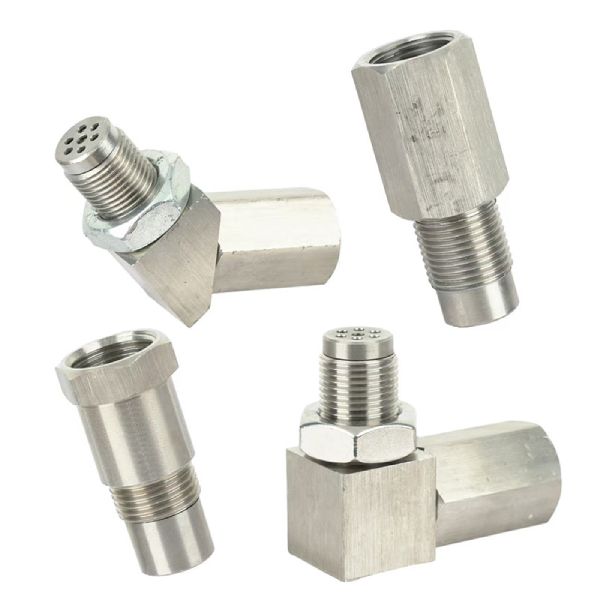
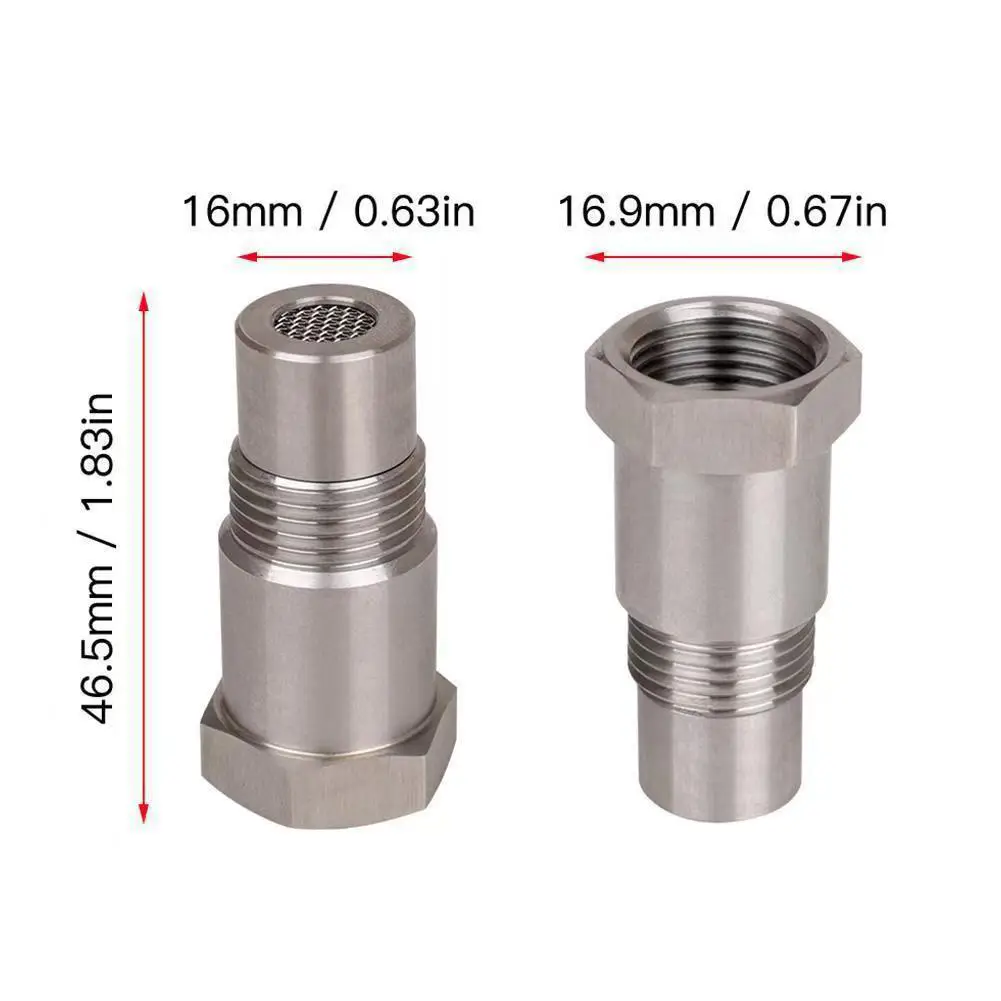
An O2 sensor spacer acts as an extension fitting that backs the secondary sensor out of the direct exhaust stream.
Mechanism: By isolating the sensor tip in a recessed chamber, less exhaust flow reaches the element, smoothing out signal fluctuations to mimic a functioning converter.
Best Suitable For: Older OBD-II vehicles, simplified exhaust setups, or budget-focused track builds.
Limitations: Modern ECUs with strict voltage response windows may still detect slow sensor response times (e.g., code P0137 or P0139).
From a manufacturing standpoint, most budget hollow defoulers are produced from 304 stainless steel bar stock via CNC turning, a process widely standardized across Chinese auto parts factories. Thread tolerances for the standard M18x1.5 specification are generally consistent across production batches, but internal chamber volume and inlet orifice sizing are not always calibrated to specific vehicle platforms or exhaust flow rates, which contributes to the inconsistent success rates noted above.
2. Mini-Catalyst Adapter Spacers
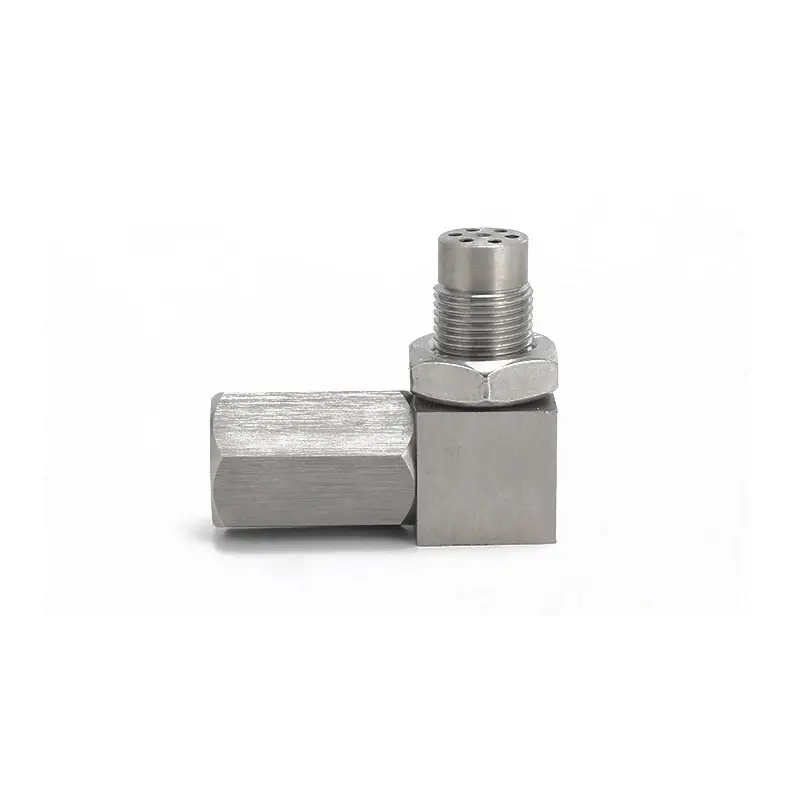
Unlike standard hollow fittings, mini-catalyst spacers contain a miniature catalytic element inside the adapter body.
Mechanism: As a tiny portion of exhaust gas passes into the adapter, the internal substrate cleans the sample before it touches the sensor tip, providing realistic gas readings.
Best Suitable For: Mid-generation vehicles where basic mechanical spacers trigger slow-response trouble codes.
The miniature catalytic substrates used in these adapters are typically 400 CPSI ceramic or metallic cores coated with a platinum, palladium, and rhodium washcoat. China hosts a substantial portion of global catalyst substrate production and precious-metal coating capacity, allowing manufacturers to integrate these cores into adapter bodies at relatively low unit cost compared to full-size replacement converters. Precious-metal loading levels vary by product tier, and this variable directly affects how effectively the mini-core treats the sampled exhaust gas and how long it remains functional under repeated heat cycles.
3. ECU Remapping and Software Calibration
Custom software tuning is the most comprehensive approach for off-road or performance applications.
Mechanism: A tuner modifies the ECU firmware to disable secondary O2 sensor diagnostic routines or adjust monitoring thresholds so trouble codes are not flagged.
Best Suitable For: Modern vehicles with complex engine management systems, forced-induction builds, or setups requiring optimized air-fuel ratios after exhaust modifications.
4. Electronic O2 Simulators
Electronic simulators are wired into the downstream sensor harness to deliver a synthetic, static voltage output directly to the ECU.
Mechanism: Generates a consistent ~0.45V signal regardless of real-time exhaust content.
Limitations: Many modern vehicle ECUs perform active lean/rich testing sweeps; static signals can be detected as non-responsive by advanced diagnostics.
Troubleshooting Matrix: Common Trouble Codes & Fixes
|
Diagnostic Trouble Code (DTC)
|
Condition / Cause
|
Primary Fix Method
|
|---|---|---|
|
P0420 / P0430
|
Catalyst Efficiency Below Threshold
|
Mini-Catalyst Spacer or ECU Calibration
|
|
P0137 / P0138
|
Downstream Sensor Circuit Low/High Voltage
|
Verify spacer depth; adjust thread stack
|
|
P0139 / P0141
|
Slow Response / Heater Circuit Performance
|
Ensure O2 sensor heating element wiring is intact
|
When evaluating spacers of any design, buyers should note that products manufactured in the same facility may be sold under multiple brand names in the US market, and listed specifications such as "304 stainless steel" or "mini catalytic converter" are not always independently verified by third parties. Thread fit, internal orifice dimensions, and catalyst core density are the practical variables that determine real-world performance, rather than branding or retail packaging alone.
Frequently Asked Questions
How long does it take for the Check Engine Light to reset after installing a fix?
After installing a mechanical adapter or flashing updated software, clear the existing trouble codes using an OBD2 scanner. The system will enter "Not Ready" status and requires a standard drive cycle (typically 20–50 miles of mixed highway and city driving) to complete self-diagnostics.
Will disconnecting the battery turn off the light permanently?
Disconnecting the battery clears temporary ECU memory and turns off the dashboard light briefly. However, once the ECU completes its internal monitoring monitors, it will re-read the downstream sensor data and turn the light back on if the signal discrepancy remains.
Does a downstream O2 sensor code affect engine performance?
On most conventional vehicles, the downstream sensor (Sensor 2) is used exclusively for catalyst monitoring and does not alter primary fuel mixture ratios. However, certain modern engines utilize secondary O2 feedback for fine-tuning fuel trims over time, making proper signal management beneficial for steady engine operation.
For vehicles operated on public roads in the United States, users should be aware that tampering with or bypassing emissions monitoring equipment may violate EPA regulations or specific state emissions laws, regardless of where the component is manufactured. O2 sensor spacers and similar adapters are typically marketed for off-road and competition use only, and their installation on street-driven vehicles remains the vehicle owner's legal responsibility.
This video demonstrates how installing an oxygen sensor spacer modifies the exhaust reading to turn off persistent catalytic converter trouble codes. How to TURN OFF the Check Engine light WITHOUT replacing the Catalytic Converter
Leave a Reply