
O2 Sensor Spacer & OBD2 Catalyst Readiness Monitor: Inspection Facts Guide
For vehicle owners who have installed aftermarket high-flow catalytic converters, performance headers, or custom exhaust systems, getting a vehicle ready for annual state emissions testing can be a nerve-wracking process. Even if the Check Engine Light (CEL) is turned off, connecting an OBD2 scanner often reveals that the Catalyst Monitor shows "Not Ready" or "Incomplete."
Most aftermarket O2 sensor spacers supplied to the U.S. automotive aftermarket are mass-produced in China, with standardized production processes tailored to common North American vehicle specifications.
When researching solutions to clear P0420 or P0430 fault codes and complete the required drive cycles, drivers frequently ask: Can installing a mini catalytic converter O2 sensor spacer actually set catalyst readiness monitors to "Ready" and pass an official state inspection?
This technical guide breaks down the legal, mechanical, and electronic realities of using micro-catalyst spacers during OBD-II emissions readiness testing.
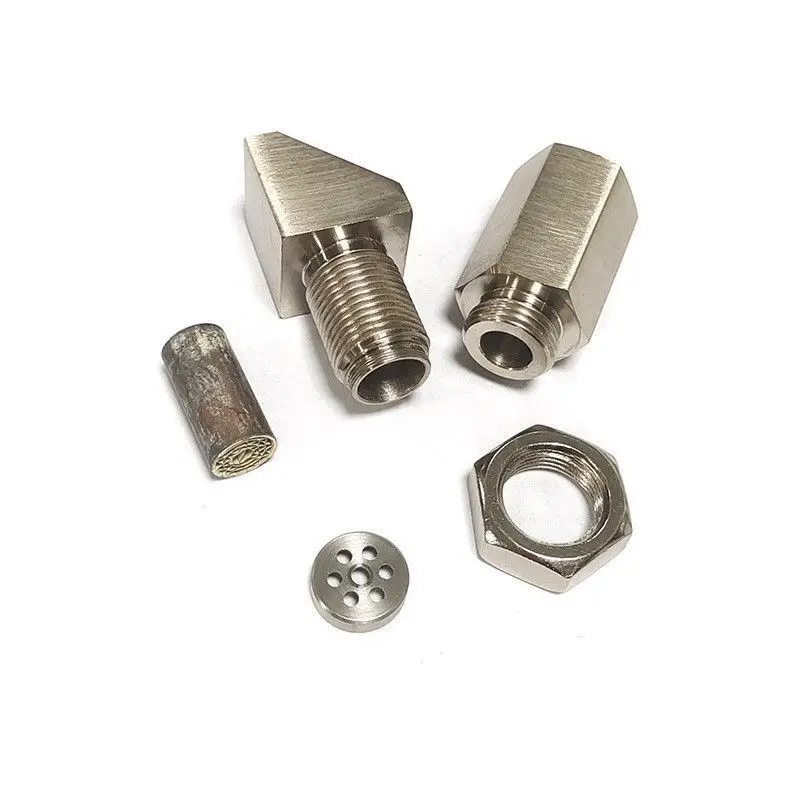
What Does an OBD2 Catalyst Readiness Monitor Actually Check During Inspection?
To understand whether a spacer can help pass an inspection, one must first clarify how state OBD-II emissions testing works.
During an official inspection, the testing machine does not merely check for active fault codes or pending Check Engine Lights; it queries the vehicle’s Engine Control Module (ECM) to verify that all internal self-diagnostic routines—known as OBD2 Readiness Monitors—have completed successfully.
[Vehicle ECM Drive Cycle] ──> [Self-Diagnostic Tests Run] ──> [Catalyst Monitor: READY] ──> [OBD2 Inspection PASS]
The Three Operational States of a Catalyst Readiness Monitor
Ready / Complete: The ECM has performed its onboard diagnostic drive cycle and verified that downstream sensor readings fall within acceptable EPA efficiency thresholds.
Not Ready / Incomplete: The battery was recently disconnected, fault codes were recently cleared, or the ECM has not experienced the exact speed/temperature conditions required to run the test.
Incinerated / Failed (DTC Triggered): The ECM ran the test, detected rapid oxygen switching on the downstream sensor, and flagged a P0420 / P0430 fault code.
How Does a Mini Catalytic Converter Spacer Interact with OBD2 Drive Cycles?
A standard hollow mechanical spacer relies entirely on distance to restrict exhaust gas flow. In modern CAN-bus engine management systems (such as Bosch, Siemens, or Denso), plain hollow spacers frequently fail the drive cycle test because they create a stagnant gas pocket, causing the ECM to trigger secondary response-time codes (P013E/P013F) or circuit low voltage codes (P0137).
Many low-cost hollow spacers on the U.S. market come from streamlined mass production lines in China, which often omit precision orifice calibration needed for modern CAN-bus vehicle systems.
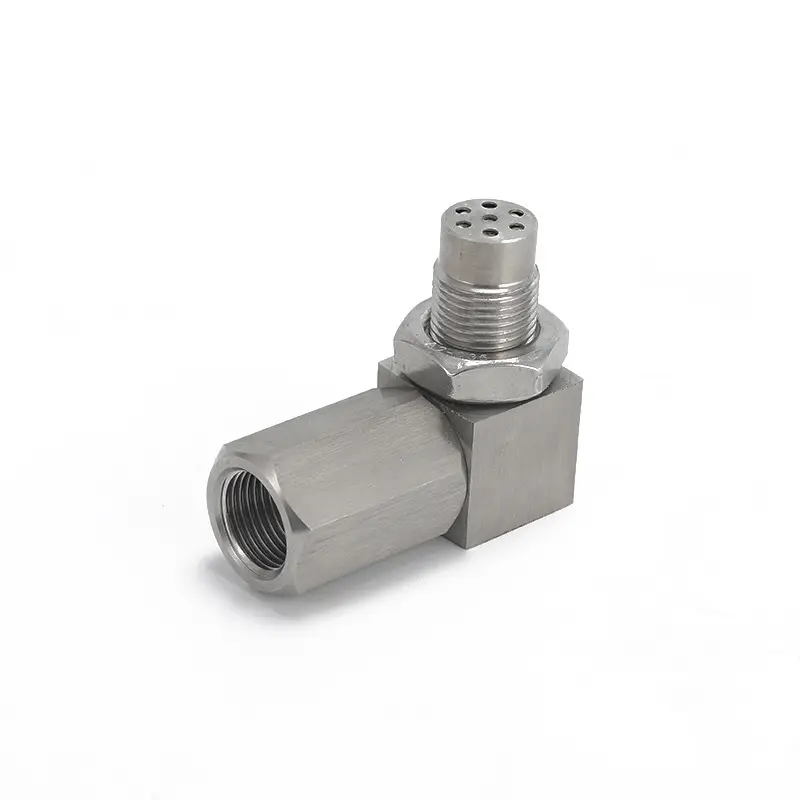
The Role of Integrated 400 CPSI Micro-Catalytic Core
A mini catalytic converter spacer features an internal 400 CPSI (cells per square inch) ceramic or metallic substrate coated with precious metals (Platinum, Palladium, Rhodium).
Chinese component manufacturers widely adopt mature substrate coating and sintering techniques for these micro-catalytic cores, maintaining consistent catalytic performance for aftermarket replacement parts.
When a tiny sample of exhaust gas enters the spacer's internal chamber:
Chemical Oxidation: The micro-catalyst chemically treats residual unburned hydrocarbons (HC) and carbon monoxide (CO).
Signal Stabilization: The downstream oxygen sensor receives a conditioned gas sample, outputting a stable DC voltage (typically 0.60V to 0.75V).
Monitor Completion: During steady highway cruising, the ECM observes this smooth voltage signal, confirms that the downstream-to-upstream voltage ratio matches factory parameters, and toggles the Catalyst Readiness Monitor from "Not Ready" to "Ready."
|
Spacer Type
|
Catalyst Monitor Status After Drive Cycle
|
|---|---|
|
Plain Hollow Extension
|
Incomplete or Failed (P0137 Low Voltage / P013E)
|
|
Mini Catalytic Converter Spacer
|
SETS TO "READY" (Smooth 0.65V DC Signal)
|
Why Might a Vehicle Still Fail State Inspection Even if the Catalyst Monitor Shows "Ready"?
While a mini-catalyst spacer can successfully allow the ECM to complete its self-diagnostic test and set the OBD2 monitor to "Ready," passing an official state inspection depends on the specific testing protocols used in your region.
1. Visual Underbody Inspections
State emissions programs (such as California CARB inspections, New York NYVIP3, or Texas emissions checks) often enforce two distinct testing phases:
The Electronic OBD2 Scan: Reading monitors and active/pending trouble codes.
The Visual Inspection: Technicians use mirrors or lifts to inspect the exhaust system for missing, modified, or relocated catalytic converters and anti-tampering devices.
Important Disclosure: A spacer will not pass a strict visual inspection if the technician notices an extension or adapter installed on the downstream oxygen sensor bung.
2. Tailpipe Sniffer Tests (ASM / IM240 Dynamometer Testing)
On older non-OBD2 vehicles or states that perform active tailpipe emissions testing using a 5-gas analyzer:
A mini-catalytic converter spacer conditions only the tiny gas sample reaching the sensor tip.
It does not treat the primary exhaust volume exiting the tailpipe. If the main catalytic converter is missing or severely degraded, the vehicle will fail the tailpipe gas analyzer test for high hydrocarbon or NOx emissions.
How to Properly Perform an Engine Drive Cycle to Set Catalyst Monitors
If you have installed a mini catalytic converter spacer to resolve a P0420 code, the ECM must undergo a specific drive cycle to change the monitor status from "Incomplete" to "Ready."
Universal OBD2 Catalyst Drive Cycle Steps:
Cold Start: Ensure the engine coolant temperature is below 50°C (122°F) before starting.
Idle Phase: Allow the engine to idle for 2.5 minutes with the rear defroster and A/C on to build electrical load.
City Cruise: Accelerate smoothly to 35 mph (55 km/h) and maintain steady speed for 3 to 4 minutes.
Highway Steady Cruise: Drive on a flat highway at a steady speed between 55 mph and 60 mph for 10 consecutive minutes without using cruise control or making abrupt throttle changes.
Deceleration Coast: Let the vehicle coast down from 55 mph to 20 mph without touching the brake or clutch pedal. This allows the ECM to run deceleration fuel cut-off diagnostic routines.
Verify Status: Connect a hand-held OBD2 scanner to verify that the Catalyst Monitor status reads "COMPLETED" or "READY."

Frequently Asked Questions (FAQ)
1. How many "Incomplete" readiness monitors are allowed to pass state inspection?
Depending on state regulations and the model year of your vehicle:
1996 to 2000 Model Vehicles: Federal guidelines typically allow up to two (2) readiness monitors to be incomplete.
2001 and Newer Vehicles: Most states allow only one (1) monitor (often the EVAP monitor) to be incomplete, while the Catalyst Monitor MUST be set to "Ready."
2. Can I clear a Check Engine Light right before driving into the inspection station?
No. Clearing codes with an OBD2 scanner or disconnecting the battery resets ALL readiness monitors back to "Not Ready" or "Incomplete." Driving directly to an inspection station immediately after clearing codes will result in an automatic rejection for incomplete monitors.
3. What thread specification is required for mini catalytic converter spacers?
Standard downstream oxygen sensors use an M18x1.5mm thread pitch. High-grade spacers are CNC-machined from 304 stainless steel or nickel-plated steel to resist severe exhaust temperatures (700°C+) and prevent galling during removal.
Chinese manufacturing facilities adopt unified M18x1.5 thread standard calibration for export spacers, ensuring basic dimensional compatibility with most mainstream US-spec vehicles.
Leave a Reply